TL;DR: Chicago Strength in Motion runs private one-on-one and small-group corrective exercise programs out of River North at 750 N Orleans St, built around a four-step process: assess, release, activate, integrate. Sessions run roughly 45 minutes to an hour with trainer Ryan Thomas, who’s NASM-certified and trained in Dynamic Neuromuscular Stabilization (DNS), and you can work with him in person or online. [INSERT: session/package pricing] covers your first movement assessment and a plan built around your own imbalances rather than a generic routine off a template. Call (847) 687-1328 or email coach.ryanthomas@gmail.com to get on the schedule.
If you spend your day at a desk downtown, whether that’s the Loop, River North, or anywhere a commute into the city is involved, a familiar pattern tends to set in: tight hips by midday, lower back discomfort by afternoon, and shoulders rounding forward regardless of how often they’re pulled back. Corrective exercise programs exist to fix that specific pattern. They start with a real assessment of how you move, then build exercises around what’s actually tight and what’s actually weak, rather than handing you a generic routine. Chicago Strength in Motion, based at 750 N Orleans St in River North, runs these programs around Pilates-inspired core work and ergonomic coaching so the correction holds up once you’re back at your own desk and chair. A search for “personal training near me” from anywhere in the Loop or River North should lead to the same kind of studio: one built around an actual assessment, not a generic program handed to everyone who walks in.
Key Takeaways
- Every program starts with a real movement assessment, so the exercises target what’s actually off in your body instead of a guess.
- The typical desk-work pattern is tight hip flexors and chest muscles paired with a weak upper back and glutes.
- Sessions run roughly 45 minutes to an hour and move through four stages: assess, release, activate, integrate.
- Ryan Thomas, who leads training at Chicago Strength in Motion, is NASM-certified and a DNS exercise specialist.
- [INSERT: years Chicago Strength in Motion has been operating] and [INSERT: number of clients or sessions completed] are worth asking about directly if track record matters to your decision.
What is a corrective exercise program?
A corrective exercise program is a plan built around how your body actually holds itself, both standing still and moving, rather than a standard set of exercises everyone gets. It targets postural imbalances at the source instead of just working around the pain they cause. Done well, it restores alignment, cleans up movement patterns, and brings pain down over time, instead of just masking it for a day.
Hours at a desk create a predictable pattern: tight hip flexors and chest muscles, paired with glutes and upper-back muscles that barely fire. OSHA’s guidance on computer workstations spells out why most office chair-and-monitor setups make this worse, not better. A corrective program at Chicago Strength in Motion starts by identifying exactly which of your muscles fall into which category before prescribing anything, so the plan releases what’s tight and strengthens what’s weak instead of guessing.
How does a corrective exercise program differ from general strength training?
General strength training builds overall capacity without necessarily fixing a faulty movement pattern underneath it. Add weight to a bad squat and you usually just get a stronger version of the same bad squat. A corrective program targets the specific imbalance causing the poor posture or movement dysfunction first, and keeps the focus on rebalancing opposing muscle groups rather than piling on load.
What does a corrective exercise session include?
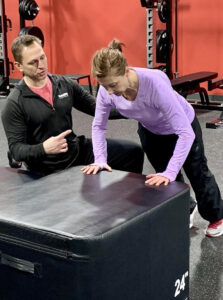
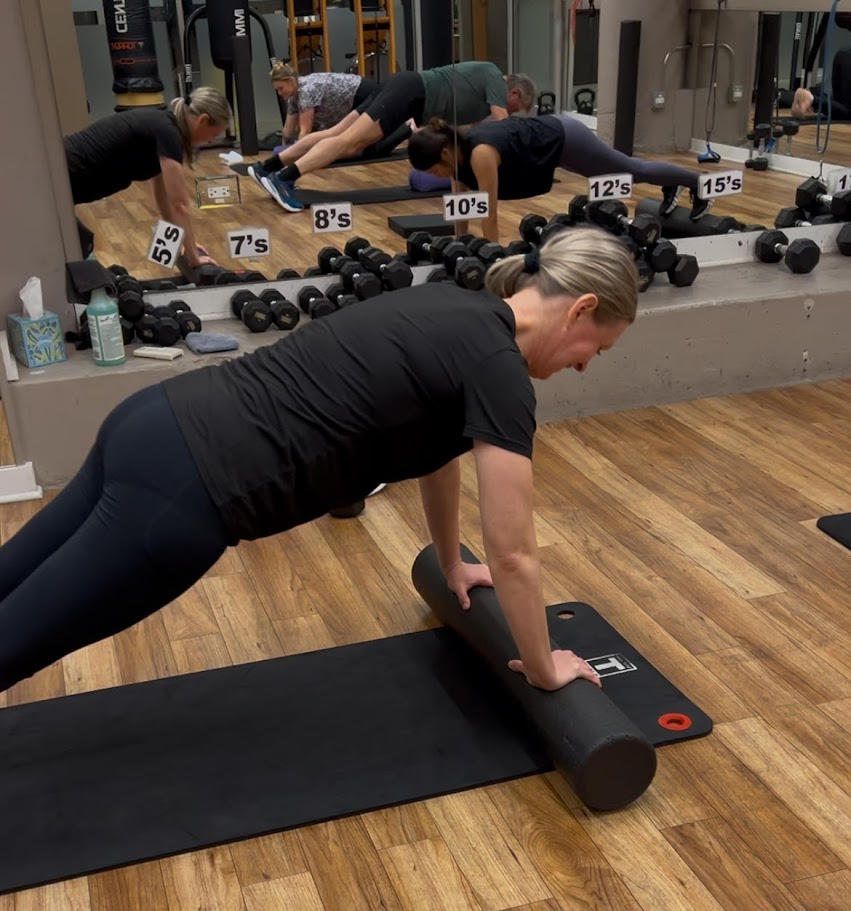
A session at Chicago Strength in Motion follows the same logical sequence every time. First, Ryan assesses posture and figures out which muscles are overactive versus underactive. Next, you work through release techniques for the tight spots, usually the chest and hip flexors. Then come activation exercises for the muscles that have gone quiet, often the glutes and deep core stabilizers. Last, integrated movements lock the correction into patterns you’ll actually use, like sitting down, standing up, and reaching overhead.
Ryan is a NASM-certified personal trainer and a DNS (Dynamic Neuromuscular Stabilization) exercise specialist, a credential built on the Prague School of Rehabilitation’s approach to retraining the nervous system and musculoskeletal system together. Chicago Strength in Motion runs both private one-on-one sessions and small group training, and the groups stay small on purpose, capped at 6 clients or fewer per trainer, so Ryan can continue to observe and correct form directly, rather than monitoring reps from a distance. Clients who take the time to understand the biomechanics behind their exercises tend to progress faster. Understanding why a correction matters, rather than performing it without that context, supports faster, more consistent progress.
Why clients in River North choose Chicago Strength in Motion
If you’re comparing options for personal training near me or small group training near me before picking a studio in this part of the city, here’s what actually separates Chicago Strength in Motion from a standard gym program or a generic online plan:
- Assessment before exercise, every time. No program starts until Ryan has actually seen how you move. That’s the opposite of picking exercises off a list.
- DNS training, not just a general CPT. Dynamic Neuromuscular Stabilization is a more specialized credential than a standard personal trainer certification, and it’s aimed specifically at retraining movement patterns rather than just building fitness.
- In-person in River North or online. Training happens at 750 N Orleans St or through online personal training sessions, so a demanding schedule doesn’t have to mean skipped sessions.
- Small groups stay small. The trainee-to-coach ratio is kept low on purpose so form corrections are specific to each person, not shouted across a room.
- Pilates-inspired core work and ergonomic coaching are built in, not sold as an add-on, which matters for anyone whose posture problem started at a desk.
- [INSERT: client review count/rating, years in business, or notable before/after results] add real proof here once available; ask Ryan directly for current numbers.
Who this is (and isn’t) for
This kind of program tends to work well for desk workers and active adults dealing with postural fatigue, muscular imbalance, or joint stiffness who are ready to do some homework between sessions, not just show up and expect a fix. It also suits people recovering strength and alignment after time off from training.
It’s a worse fit for anyone with an acute injury who hasn’t been cleared by a physician yet, or for someone looking for a fast fix with no changes to daily habits. Corrective work only sticks if you also clean up how you sit and stand during the other 23 hours of the day. [INSERT: any additional contraindications or intake requirements] should be confirmed directly with Ryan before booking if you have an existing diagnosis.
How does movement dysfunction affect your body?
Movement dysfunction disrupts the body’s natural alignment and places unnecessary stress on joints, ligaments, muscles, and nerves. That stress does not remain isolated. Poor posture, one of the main drivers of movement dysfunction, manifests as pain, fatigue, and difficulty with balance. The body compensates for misalignment by overloading certain structures while others weaken from disuse.
What are the most common signs of movement dysfunction?
Sitting for hours creates a predictable pattern: tight hip flexors and chest muscles alongside weak glutes and upper-back muscles. That imbalance pulls the body out of alignment and shows up as forward head posture, rounded shoulders, lower back pain, and joint strain. These are visible signals of a deeper movement dysfunction that tends to worsen without some form of intervention.
How do corrective exercise programs address these problems?
Corrective exercise programs address the root cause rather than the symptoms. Chicago Strength in Motion uses a functional movement assessment to pinpoint the specific misalignments, then builds a targeted corrective strategy around them. The process follows a clear sequence:
- Assess movement patterns to find restrictions and compensations.
- Release tight, overactive muscles with targeted techniques.
- Activate weak, underactive muscles with precise exercises.
- Integrate the corrected pattern into basic, everyday movements.
Posture correction rebuilds alignment from the ground up. Clients learn to notice and correct faulty patterns during ordinary daily activities, which is where the lasting change takes hold, not only during the session itself.
What are the prerequisites for starting posture correction fitness?
A functional movement assessment is the required first step before any posture correction program begins. It identifies the imbalances and movement dysfunctions that would otherwise go unaddressed. Skip this step and you risk reinforcing a bad pattern instead of fixing it.
Ryan Thomas, the NASM-certified trainer at Chicago Strength in Motion, builds individualized programs after that assessment, combining corrective exercise technique with Pilates-inspired core work and ergonomic coaching. That way, every exercise actually matches your body mechanics and postural needs instead of a one-size-fits-all template.
What does a functional movement assessment involve?
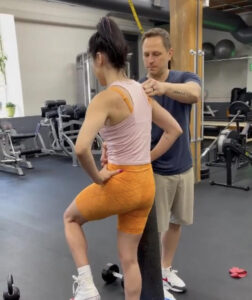
The assessment looks at how you move through fundamental patterns: squatting, reaching, rotating. Ryan watches joint alignment, muscle activation, and the compensations your body makes to get around a weak link. Those observations point to the root cause of your postural fatigue and stiffness.
How long does a corrective exercise session last?
Each session runs about 45 minutes to an hour, long enough for both assessment work and hands-on corrective exercise without rushing either one.
Corrective exercise programs at Chicago Strength in Motion follow a structured progression:
- Complete a functional movement assessment with Ryan.
- Review the findings so you understand your specific imbalances.
- Start targeted exercises that address the movement dysfunction identified.
- Add ergonomic coaching for daily posture habits, including how you sit at your desk.
Training happens in person at 750 N Orleans St or through online personal training, so a packed schedule doesn’t have to derail the plan. Both formats get the same individualized attention to form and alignment.
How do you execute a corrective exercise program step by step?
A corrective exercise program runs through a structured four-step sequence. A real movement screening identifies the root dysfunctions before any strengthening starts. Skip that screening and the underlying imbalance stays unaddressed, which just drags out the discomfort and raises injury risk.
What happens during the initial movement screening?
Step one is a movement screening to pinpoint muscle imbalances and postural deviations. Chicago Strength in Motion pairs this screening with targeted strength work and mobility drills aimed at cutting down common workout injuries. Tight chest muscles and a weak upper back are frequent findings here.
How are tight muscles released before strengthening?
Step two is targeted mobility work that releases the overactive muscles. A short routine, around 10 minutes, resets the body by loosening up the chest and hip flexor areas. Getting range of motion back in those spots sets up the strengthening work that follows.
Which muscles need strengthening for better alignment?
Step three strengthens the underactive muscles that actually support good alignment, mainly the upper back and core, using exercises like rows and bridges. A handful of targeted exercises, done consistently, retrain the body to hold a better position on its own.
How does daily habit reinforcement work?
Step four folds the corrective exercises into daily movement: mindful sitting, better standing habits, noticing when you’ve slumped back into the old pattern. This is the part that happens outside of sessions, and it’s what keeps the old movement dysfunction from creeping back in.
Posture correction only works if the exercises are done correctly, which is why Chicago Strength in Motion’s trainers give individualized modifications even within small group settings. Keeping the trainee-to-coach ratio low means someone is actually watching your form, which matters for resolving dysfunction rather than just adding reps. Clients after deeper neuromuscular retraining can go further with Dynamic Neuromuscular Stabilization, which works by training the nervous system and musculoskeletal system together rather than treating them separately.
What common mistakes should you avoid in posture correction?
Posture correction tends to fail for the same recurring reasons. Avoiding these is usually what separates a program that produces lasting results from one that fades after a few weeks.
Why does stretching alone fail to fix posture?
Stretching the tight muscles without strengthening the weak ones ignores half the problem. Movement dysfunction happens because overactive muscles stay tight while the opposing muscles weaken. Sitting all day creates tight hip flexors and chest muscles paired with weak glutes and upper back stabilizers. Stretching the chest while leaving the weak upper back unsupported typically undoes the progress within a week. Real correction means strengthening the underperforming side, not just loosening the tight one.
How do daily habits sabotage posture progress?
Ordinary daily routines can quietly reinforce poor alignment. Hours of sitting, scrolling on a phone, and standing with weight shifted onto one hip all contribute to slouched shoulders and a forward head position. That undoes progress from even a disciplined training schedule. Clients who put in the work during sessions but ignore their desk setup or sitting posture the rest of the day lose ground between appointments. Staying aware of it throughout the day is what locks in what you built in training.
What risks come from skipping professional guidance?
Generic posture routines, pulled from a video or an app, lead to plateaus, burnout, or injury because everyone’s imbalance is different. An exercise that helps one person can aggravate someone else’s specific misalignment. Ryan Thomas builds individualized programs for this exact reason, so clients aren’t guessing at movements that might make things worse. Without that kind of assessment, you’re just as likely to reinforce the problem as fix it.
Why do generic programs often backfire?
A cookie-cutter posture plan ignores the specific pattern each client actually has. A program built for generic forward-head posture won’t address someone’s particular combination of weak deep neck flexors and tight suboccipital muscles, so it plateaus because it’s targeting the wrong thing. Worse, the wrong movement can strain a joint that’s already compromised. Individualized programming avoids this by matching the exercise to the actual problem. Anyone who wants to sidestep workout-related setbacks should look at proper warm-ups and correct form before starting any new routine.
Straight answers on the practical questions:
- Location: 750 N Orleans St, Chicago, Illinois 60654, in River North
- Service area: In-person personal training sessions are available at our River North studio in Chicago, conveniently located near Old Town, the Near North Side, Gold Coast, Lincoln Park, and River West. Online personal training is available anywhere with a reliable internet connection.
- Getting started: If you’ve been searching for a personal trainer near me and want to actually talk through private one-on-one coaching, small group sessions, or just getting pointed toward a self-guided routine you can run on your own, call (847) 687-1328 or email coach.ryanthomas@gmail.com to set up an initial movement assessment.
FAQ
What does a corrective exercise session include?
A session follows a sequence of assessment, release, activation, and integrated movement. Chicago Strength in Motion offers private one-on-one training and small group training with a low trainee-to-coach ratio for individualized corrective work.
Who leads corrective exercise programs at Chicago Strength In Motion?
Ryan Thomas leads small group training, and he personally builds every workout session. He’s a NASM-certified personal trainer and a DNS exercise specialist.
Where is Chicago Strength in Motion located, and can I train online?
The studio is at 750 N Orleans St in River North, Chicago. Online personal training sessions are also available for clients who need more schedule flexibility, with the same individualized attention to form.
Is a corrective exercise program right for me if I have an existing injury?
It depends on the injury. Anyone with an unresolved acute injury should get medical clearance first. Chronic postural issues from desk work, like tight hips or rounded shoulders, are exactly what this kind of program is built to address.
Conclusion
Corrective exercise programs deliver lasting posture improvement only when they follow the full sequence: assessment, release, strengthening, and daily habit reinforcement. Skipping straight to strengthening, or stretching without strengthening the other side, is how most people end up back where they started. Clients who commit to the individualized approach at Chicago Strength in Motion, in River North, avoid the common pitfalls of generic routines that were never built for their specific imbalance in the first place. The next step is a movement screening to find out exactly what’s driving your alignment issues. Call (847) 687-1328 or email coach.ryanthomas@gmail.com to get one scheduled.