The benefits of 1-on-1 personal fitness coaching are profound and multifaceted, offering individuals a tailored approach to achieving their fitness goals. With personalized program design, real-time feedback, and built-in accountability, clients can experience significant improvements in their health and well-being. personal fitness coaching
Indeed, research consistently highlights the effectiveness of personal training in transforming individuals’ attitudes towards physical activity.
Efficacy of Personal Training on Physical Activity Attitudes
More and more people seeking the expertise of personal trainers in recent years. With very few previous efforts evaluating the effectiveness of the personal training experience in the scientific literature, this study utilized movement in the Stages of the Transtheoretical Model (STM) to determine the efficacy of personal training.
The effectiveness of personal training on changing attitudes towards physical activity, 2003
This article will explore the key advantages of personalized fitness coaching, including how individualized strength training enhances your fitness journey, the importance of accountability, and how custom workout plans cater to all fitness levels. Additionally, we will discuss the differences between small group training and private sessions, client success stories, and the booking and pricing options available at Chicago Strength In Motion.
What Are the Key Advantages of Personalized 1-on-1 Fitness Coaching?

The key advantages of personalized 1-on-1 fitness coaching include customized program design that targets individual strengths and limitations, real-time feedback and technique correction for safer movements, and accountability and motivation through scheduled sessions. These factors enhance long-term adherence to fitness goals, reduce injury risk, and boost efficiency in workouts.
How Does Individualized Strength Training Enhance Your Fitness Journey?
Individualized strength training enhances your fitness journey by providing tailored programs that cater to your unique health goals and fitness levels. This personalized approach includes specific workout routines, nutritional guidance, and regular progress assessments, ensuring that you stay on track and adapt your training as you progress. It maximizes results, reduces the risk of injury, and fosters long-term adherence to your fitness regimen. Additionally, personalized training offers real-time feedback and motivation, which can significantly improve your overall fitness experience and outcomes.
Why Is Accountability Crucial in Private Training Sessions?
Accountability is crucial in private training sessions because it enhances motivation and adherence to fitness routines. Scheduled sessions create a supportive environment that fosters consistent attendance and effort. Trainers track progress and adjust programming to prevent plateaus. This structured accountability helps individuals maintain their exercise habits and achieve their fitness goals.
Studies further support that personal trainers play a vital role in boosting exercise adherence and motivation. personal training
Personal Trainers Boost Exercise Adherence & Motivation
Personal trainers may positively influence exercise behavior by providing motivational support. Individuals who receive regular exercise coaching are more likely to adhere to their exercise routine, compared with those who exercise individually.
Impact of In-Person and Mobile Exercise Coaching on Psychosocial Factors Affecting Exercise Adherence in Inactive Women With Obesity: 20-Week …, 2025
How Do Customized Workout Plans Cater to All Fitness Levels?
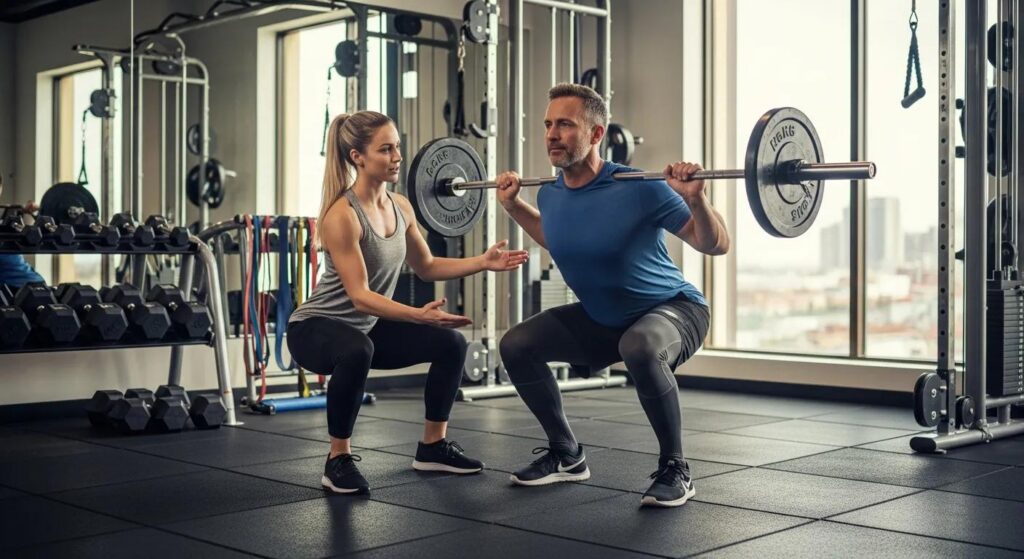
Customized workout plans cater to all fitness levels by taking into account individual fitness levels, specific goals, and any health considerations. This personalized approach ensures that the workouts are safe, effective, and tailored to meet the unique needs of each person, whether they are beginners or more advanced. The plans maximize efficiency, keep individuals motivated, and allow for progress tracking through regular assessments and adjustments.
This client-centered approach is paramount, ensuring that training plans are truly responsive to individual needs and abilities.
Client-Centered Personalized Training Plans
Finally, we advocate an athlete, client and patient-centered approach whereby an individual’s needs and abilities are the main consideration behind all decision-making. This implies that sometimes the most effective form of training is eschewed if the athlete, client or patient has other wishes.
Personalized, evidence-informed training plans and exercise prescriptions for performance, fitness and health, H Wackerhage, 2021
What Makes Tailored Fitness Programs Effective for Beginners and Athletes?
Tailored fitness programs are effective for beginners and athletes due to several key factors:
- Personalization: Programs are customized based on individual fitness levels, goals, and health considerations, ensuring that workouts are efficient and focused on achieving the best results.
- Expert Guidance: Certified personal trainers provide expert feedback and coaching, which helps prevent injuries and ensures proper exercise progressions.
- Variety and Engagement: Incorporating a variety of exercises, such as resistance training, bodyweight movements, and recovery activities like yoga and Pilates, keeps training exciting and prevents burnout.
- Education: Trainers explain the rationale behind exercises, enhancing understanding and commitment, which is crucial for long-term adherence to fitness routines.
- Progress Tracking: Regular assessments and adjustments to the workout plan help track progress, celebrate achievements, and maintain motivation.
- Integration of Nutrition and Lifestyle: Combining training with nutrition coaching and lifestyle habits supports overall health and enhances performance.
How Are Workout Plans Adapted to Personal Fitness Goals?
Workout plans are adapted to personal fitness goals through a thorough assessment that includes reviewing fitness levels, specific goals, and health considerations. This data informs the creation of a personalized workout plan that maximizes efficiency, keeps motivation high, and allows for progress tracking. The plan is tailored to address individual needs and ensure safety, ultimately helping clients achieve their fitness goals effectively.
What Are the Differences Between Small Group Training and Private Sessions?
The differences between small group training and private sessions are as follows:
- Personalization:Small Group: Moderate personalization with scalable modifications and progress checks.Private Sessions: High personalization with fully tailored programming.
- Cost:Small Group: Mid-range cost, typically $25–$40 per session.Private Sessions: Higher cost, typically $70–$120 per session.
- Typical Results:Small Group: Strong adherence and steady progress due to social accountability and structured support.Private Sessions: Fastest individualized progress due to focused attention.
Small group training offers a balance of community and coaching, while private sessions provide a more individualized approach.
How Does 1-on-1 Training Provide More Personalized Attention?
1-on-1 training provides more personalized attention by tailoring each session to the individual’s specific needs, goals, and fitness levels. This customization allows clients to receive focused guidance and support, ensuring they achieve their desired outcomes effectively.
When Should You Choose Private Coaching Over Group Workouts?
You should choose private coaching over group workouts when you need specialized attention for physical therapy recovery, managing old injuries, or customized programming. Private coaching allows for a focus on mastering movements with special attention to mobility and form, which is not as feasible in a larger group setting.
How Do Client Success Stories Illustrate the Impact of 1-on-1 Personal Training?
Client success stories illustrate the impact of 1-on-1 personal training by showcasing how personalized training programs are tailored to meet individual needs, goals, and fitness levels. This customization allows clients to receive focused attention and guidance, which can lead to effective achievement of their desired outcomes.
What Measurable Fitness Improvements Have Clients Achieved?
Clients at Chicago Strength In Motion have achieved measurable fitness improvements such as losing over 30 pounds and significantly enhancing their strength and endurance within six months of consistent training. Chicago Strength In Motion
How Do Testimonials Reflect Motivation and Program Customization?
Testimonials reflect motivation and program customization by showcasing how small group training fosters social accountability and personalized progress. Clients often share their experiences of improved adherence to fitness routines due to the supportive environment and tailored programming that trainers provide. The combination of peer motivation and individualized adjustments helps clients achieve their goals effectively, highlighting the importance of both community and customization in their fitness journeys.
What Are the Booking and Pricing Options for Private Fitness Coaching in Chicago?
The booking and pricing options for private fitness coaching in Chicago at Chicago Strength In Motion are as follows:
- Pricing: Personal training sessions typically range from $60 to $140 per hour, depending on the trainer’s experience and package options. The rates are categorized as:Emerging Coach: $60–$75 (Entry-level trainer focused on form)Certified Specialist: $75–$100 (Advanced programming and nutrition tips)Master Coach: $100–$140 (Elite expertise with tailored progress)
- Booking: Clients can request more information and schedule sessions directly through the Chicago Strength In Motion website. There are no contracts, and clients can cancel anytime.
How Flexible Are Scheduling and Session Packages?
Clients can enjoy flexible scheduling options that accommodate their busy lifestyles. Session packages can be tailored to fit individual needs, allowing clients to choose the frequency and duration of their training sessions.
What Should You Expect Regarding Costs for Personalized Training?
You can expect the costs for personalized training to vary based on the trainer’s experience and the type of training. For one-on-one personal training, typical rates range from $60 to $140 per hour, depending on the trainer’s certification level:
- Emerging Coach: $60–$75
- Certified Specialist: $75–$100
- Master Coach: $100–$140
Small group personal training, which is more cost-effective, typically costs between $25 and $40 per session, with a trainer-to-client ratio of 1:4 to 1:6. Discounts and package deals may also be available to make training more affordable. small group training
| Training Type | Personalization Level | Cost per Session | Typical Results |
|---|---|---|---|
| Small Group | Moderate | $25–$40 | Steady progress |
| Private | High | $70–$120 | Fast individualized progress |
Frequently Asked Questions
What qualifications should I look for in a personal trainer?
When selecting a personal trainer, it’s essential to consider their qualifications and certifications. Look for trainers who hold recognized certifications from reputable organizations, such as the National Academy of Sports Medicine (NASM) or the American Council on Exercise (ACE). Additionally, consider their experience, specialization in areas relevant to your goals (like weight loss, strength training, or rehabilitation), and their ability to communicate effectively. A good trainer should also have a solid understanding of nutrition and exercise science to provide comprehensive guidance.
How can I track my progress with personal training?
Tracking progress in personal training can be achieved through various methods. Trainers often use fitness assessments, which may include measuring body composition, strength tests, and endurance evaluations. Additionally, keeping a workout journal or using fitness apps can help you log workouts, track weights lifted, and monitor changes in your body measurements. Regular check-ins with your trainer to discuss your progress and adjust your goals are also crucial for maintaining motivation and ensuring you stay on track with your fitness journey.
What should I wear to my personal training sessions?
Wearing the right attire for personal training sessions is important for comfort and performance. Opt for moisture-wicking, breathable fabrics that allow for a full range of motion. Athletic shoes with good support and grip are essential to prevent injuries during workouts. Additionally, consider wearing supportive undergarments, especially for high-impact activities. It’s also a good idea to bring a water bottle to stay hydrated and a towel for personal comfort during your sessions.
Can personal training help with injury recovery?
Yes, personal training can be beneficial for injury recovery, especially when working with a trainer who has experience in rehabilitation. A qualified trainer can design a program that focuses on strengthening the affected area, improving mobility, and preventing future injuries. They will also ensure that exercises are performed with proper form to avoid aggravating the injury. However, it’s crucial to consult with a healthcare professional before starting any training program post-injury to ensure it aligns with your recovery plan.
How often should I train with a personal trainer?
The frequency of training sessions with a personal trainer depends on your individual goals, fitness level, and schedule. For beginners, training 1-2 times per week can be effective for building a foundation. More advanced clients may benefit from 2-4 sessions per week to achieve specific goals. It’s also important to incorporate rest days and self-directed workouts into your routine. Discussing your goals and preferences with your trainer can help determine the best training frequency for you.
What is the typical duration of personal training sessions?
Personal training sessions typically last between 45 to 60 minutes. This duration allows enough time for a proper warm-up, the main workout, and a cool-down period. Some trainers may offer shorter sessions, especially for clients who are just starting or have time constraints. It’s essential to communicate your preferences and needs with your trainer to ensure that the session length aligns with your fitness goals and schedule.
Conclusion
Personalized 1-on-1 fitness coaching offers significant benefits, including tailored programs, real-time feedback, and enhanced accountability, all of which contribute to achieving your health goals effectively. This individualized approach not only maximizes results but also fosters a supportive environment that encourages long-term adherence to fitness routines. By choosing the right personal trainer, you can unlock your full potential and transform your fitness journey. Discover how our expert trainers can help you reach your goals by exploring our services today.