Undetermined Due to Lack of Web Presence.
By Chicago Strength in Motion Editorial Team · Updated 2026-07-09
Weight-bearing aerobic activities, strength training, flexibility work. Balance exercises are the most effective movements for improving bone density, helping maintain bone mass. Reduce fracture risk as you age. These exercises also build muscle, which improves coordination and stability — key factors in fall prevention for older adults.
Weight-bearing and resistance exercises are among the most effective methods for improving bone density. Activities that load the skeleton — such as strength training, walking. Balance work — stimulate bone formation and reduce fracture risk. Chicago Strength in Motion designs individualized programs in River North that build stronger bones, muscles, and coordination simultaneously.
Key Takeaways
- Weight-bearing exercises directly stimulate bone growth by forcing bones to work against gravity.
- Osteoporosis weakens bones and raises fracture risk, making exercise a critical prevention tool.
- 3 exercise types build bone density: weight-bearing, flexibility, and bone-strengthening movements.
- Strong muscles improve balance, reducing fall risk and protecting bones from debilitating fractures.
What Do You Need Before Starting Bone-Strengthening Exercise?
Bone health fitness begins with a clear assessment of current bone status, physical history, and movement quality. Skipping this step puts clients at serious risk — those with advanced bone loss face elevated fracture risk from exercises that would be safe for others.
Does bone density level affect which exercises are appropriate?
Improving bone density requires matching exercise selection to a client’s actual bone health status. Clients with more advanced osteoporosis exercise restrictions may need to avoid certain high-impact or spinal-loading movements entirely. Starting without this knowledge increases injury risk significantly.
What qualifications should a trainer have before designing a bone-strengthening program?
Chicago Strength in Motion’s certified personal trainers evaluate each client’s posture, form, and physical history before programming begins. Ryan Thomas, who leads training at Chicago Strength in Motion, holds both NASM personal trainer certification and DNS exercise specialist credentials. A qualified foundation for bone health programming.
Before beginning, clients should confirm the following prerequisites are addressed:
- Obtain medical clearance from a primary care provider
- Disclose any history of fractures or persistent joint pain
- Complete a movement and posture assessment with a certified trainer
Which Exercises Most Effectively Build Bone Density?
Improving bone density requires a combination of strength training, weight-bearing aerobic activity, and balance work. Skipping any one of these categories leaves bones, muscles, and joints more vulnerable to the progressive bone loss that leads to osteopenia and, eventually, osteoporosis.
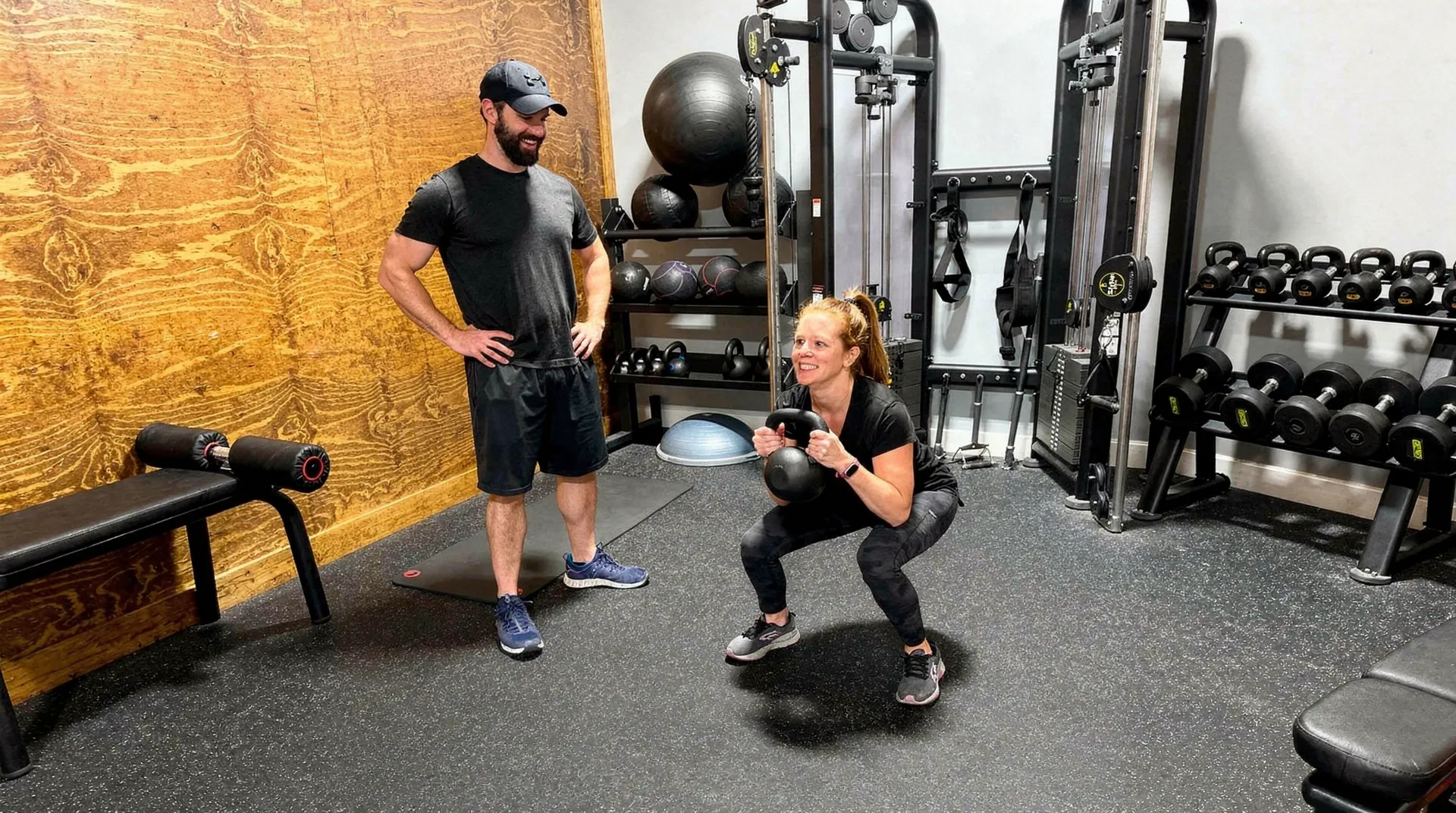
Strength training — using free weights, resistance bands, or bodyweight. Directly stimulates bone remodeling by placing mechanical load on the skeletal system. Osteoporosis exercise protocols prioritize upper-back movements in particular, because stronger back muscles actively support spinal posture and vertebral bone density. Without this stimulus, bones lose density at a rate that accelerates with age.
What types of movement count as bone-strengthening exercise?
A complete bone health fitness program draws from three distinct movement categories. Each category targets a different mechanism of bone protection:
| Exercise Category | Primary Bone Benefit |
|---|---|
| Strength training (free weights, bands, bodyweight) | Builds muscle and stimulates bone remodeling |
| Weight-bearing aerobic activity (e.g., walking) | Places mechanical stress on bones, preventing bone loss |
| Balance and stability training | Reduces fall risk, protecting bones from fracture |
Together, these three categories keep bones, muscles, and joints strong and ward off both osteopenia and osteoporosis.
How much does balance training actually reduce fall risk?
Balance training is not optional in a bone health program — it is a clinical priority. Research shows that Fitness Training in River North Chicago: Overcome Plateaus & Burnout by nearly one-third among older adults at high risk of falling. A fall avoided is a fracture avoided, which makes balance work as protective as any loading exercise.
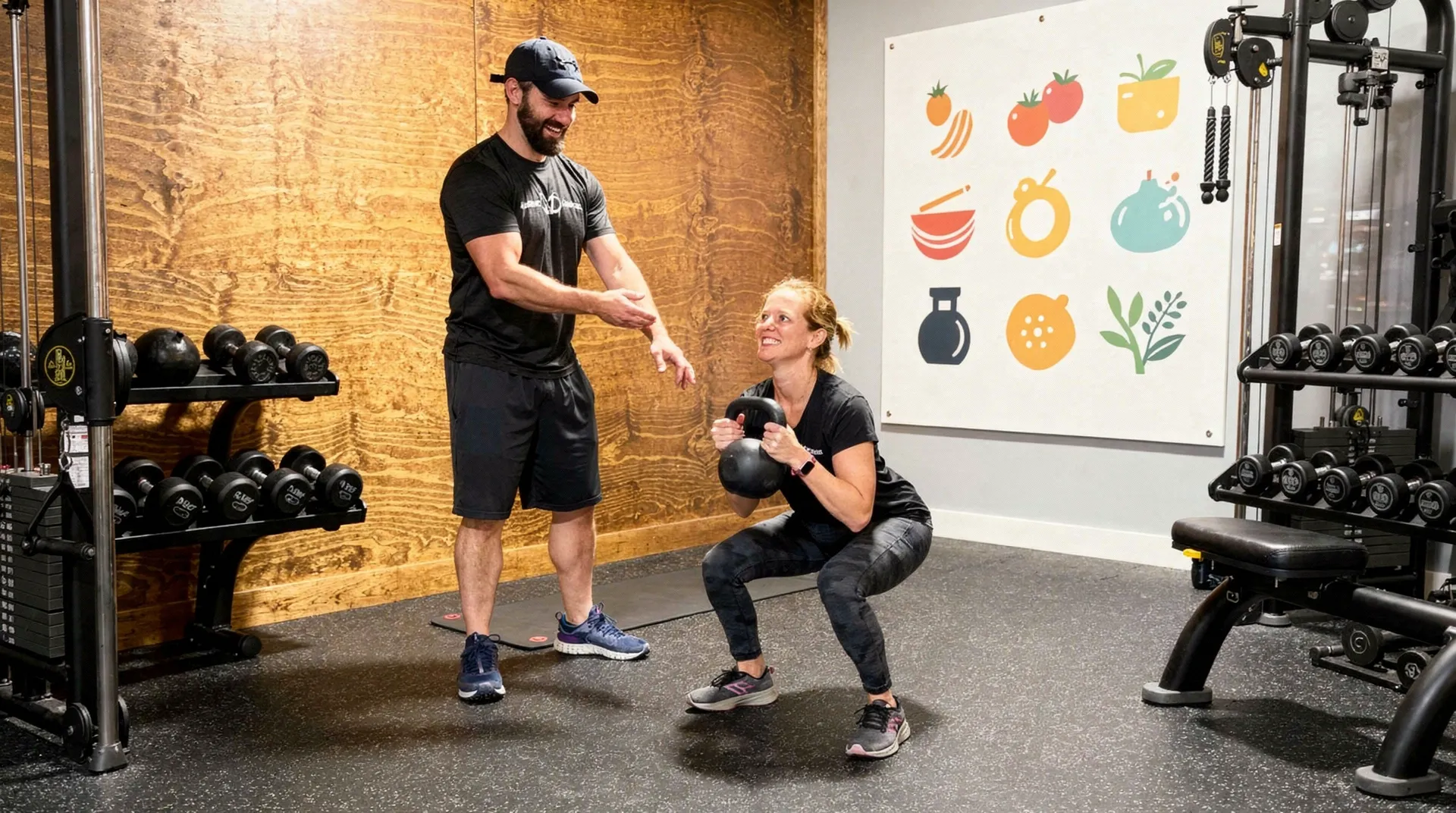
Chicago Strength in Motion structures functional training sessions of approximately 45 minutes to one hour around resistance. Functional movement patterns that directly address all three of these bone-protective categories. Clients receive individualized exercise selection based on posture assessment. Movement quality, ensuring the right exercises are performed correctly for each person’s body.
How Do You Avoid Common Mistakes in Bone-Density Training?
Avoiding common mistakes in bone health fitness starts with prioritizing correct posture and form on every exercise. Skipping this step means mechanical loading — the physical stress that drives bone remodeling. Gets applied incorrectly, increasing injury risk and stalling progress.
Follow these steps before and during every training session:
- Assess movement quality first. Confirm posture and alignment before adding load.
- Match exercises to the individual’s body. Doing the right exercise the wrong way for a specific body eliminates the benefit.
- Address nutrition alongside training. Dietary factors directly influence bone mineral density, making nutrition guidance a non-negotiable component of any program.
- Work with a certified trainer. A 1-on-1 or small group setting helps clients overcome persistent pain and recurring injuries that otherwise interrupt consistent osteoporosis exercise routines.
Why Does Form Matter So Much for Improving Bone Density?
Correct form ensures mechanical loading reaches the targeted bone tissue safely. Without precise technique, clients plateau, burn out, or sustain injuries that set back improving bone density progress entirely.
How Does Nutrition Fit Into a Bone-Strengthening Program?
Dietary factors directly influence bone mineral density alongside exercise. Integrating nutrition guidance into a training program addresses both sides of the bone-health equation simultaneously.
Building stronger bones is a lifelong commitment, and the exercises explored throughout this article. Weight-bearing movement, resistance training, and targeted mobility work — form the foundation of a sustainable, injury-resistant body. At Chicago Strength in Motion, certified trainers design every session around your individual posture, mechanics. Goals, ensuring you perform the right exercises the right way for your body. Whether through private 1-on-1 training or small group sessions, expert guidance transforms bone-strengthening principles into lasting, measurable results. Learn more about our approach in Build Strong Foundation:Core Strength for Functional Fitness.
FAQ
What types of exercises most effectively improve bone density?
Weight-bearing aerobic activities, strength training, flexibility work. Balance exercises are the most effective movements, stimulating bone formation while building muscle to improve coordination and reduce fracture risk.
What qualifications does Coach Ryan Thomas hold for designing bone-strengthening programs?
Ryan Thomas holds NASM personal trainer certification. DNS exercise specialist credentials, providing a qualified foundation for programming bone health training at Chicago Strength in Motion.
What steps do clients complete before starting a bone-strengthening program at Chicago Strength in Motion?
Clients obtain medical clearance, disclose any fracture history or joint pain. Complete a movement and posture assessment with a certified trainer before programming begins.
Conclusion
Improving bone density with exercise is achievable through a structured combination of weight-bearing aerobic activity, resistance training, and balance work — three categories that each protect bones through a distinct mechanism. Correct form and posture are non-negotiable: mechanical loading only stimulates bone remodeling when it reaches the right tissue safely, and nutrition must run alongside training to address both sides of the bone-health equation. For women over 50 and anyone managing osteoporosis risk, pairing a qualified trainer’s guidance with individualized programming is the difference between stalling and building measurable, lasting bone strength. Those ready to move from principles to practice can connect with the certified trainers at Chicago Strength in Motion to begin a program matched to their bone health status, movement quality, and goals.