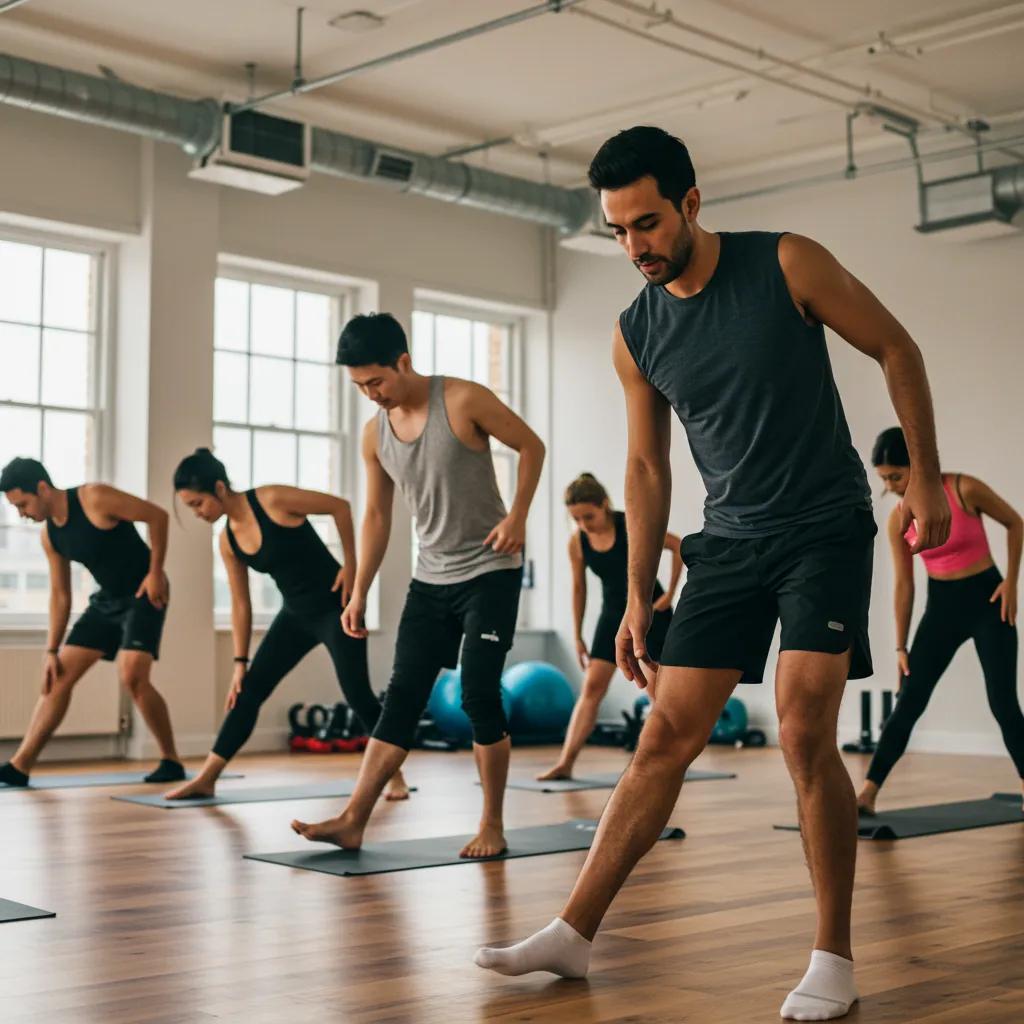
Mobility workout classes teach movement quality, joint range, and tissue resilience so you can move easily for daily life and sport. This guide explains what mobility-focused classes are, how they work, and why River North residents should consider them to reduce pain, improve function, and boost athletic performance. Readers will learn the main class types available locally, how dynamic stretching and corrective exercise differ, practical at-home routines to reinforce class learning, and a simple decision framework for choosing the right class. Common keywords covered include mobility workout classes River North, functional fitness River North, and mobility to help you find relevant options and make informed choices. If you want to improve joint health or recover from movement limitations, this article maps clear next steps: understand modalities, evaluate studios, practice targeted drills, and try an assessment or class. Current research shows consistent, assessment-led mobility work produces measurable gains in range of motion and movement control when paired with strength training and guided progression.
What Are Mobility-Focused Workout Classes and Why Are They Important?
Mobility-focused workout classes prioritize usable range of motion, neuromuscular control, and soft-tissue adaptability to improve how you move under load and speed. These classes work by combining joint-specific drills, controlled articular rotations, and movement reprogramming to increase tissue tolerance and motor patterning, which reduces pain and lowers injury risk. The result is better functional range—movement you can actually use during daily tasks, sport, and strength training—rather than passive flexibility alone. Understanding this mechanism helps you pick that match your goals and limitations and sets expectations for progress.
Mobility classes deliver several converging benefits that support long-term function and performance.
- Joint Health: Targeted drills restore range and load tolerance in specific joints.
- Functional Range: Movement patterns translate to improved daily and athletic tasks.
- Injury Prevention: Better control and tissue conditioning reduce common injury mechanisms.
How Do Mobility Classes Improve Flexibility and Joint Health?
Mobility classes improve flexibility and joint health by retraining movement patterns while progressively loading tissues to increase capacity. Instructors use a mix of dynamic warm-ups, joint-specific drills, and soft-tissue work to change neuromuscular recruitment and increase tendon, ligament, and muscle tolerance. Practical class activities include controlled articular rotations, thoracic flows, and loaded end-range holds that reinforce stable movement within new ranges. Consistently applying these drills with feedback yields durable flexibility that supports performance and reduces compensatory movement patterns.
These neuromuscular improvements naturally lead into choices about local class formats and modalities, which determine how drills are taught and scaled.
What Types of Mobility Training Are Offered in River North?
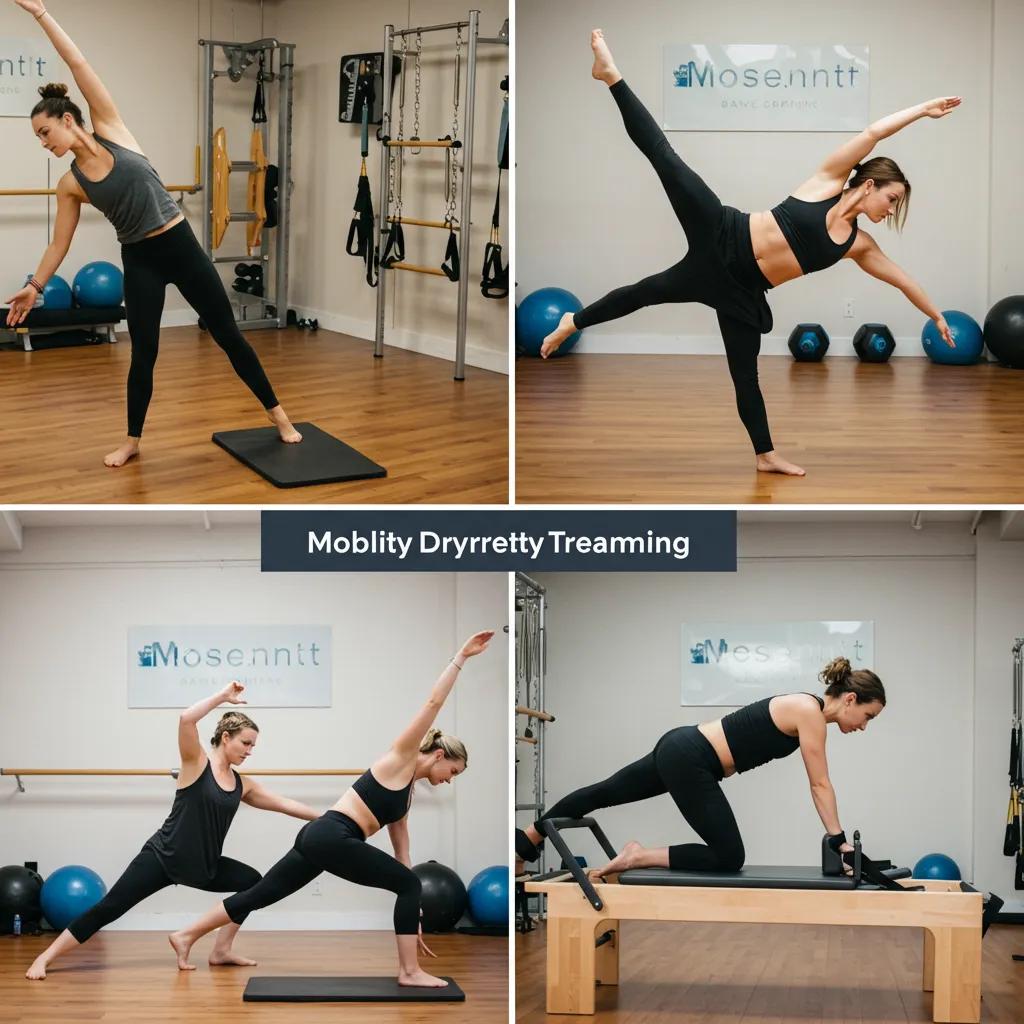
River North studios typically offer distinct modalities: dynamic stretching, corrective exercise, Pilates, and mobility-focused strength work tailored to different outcomes. Dynamic stretching classes emphasize movement at speed and flow to prepare for activity, corrective exercise focuses on assessment-driven remediation, Pilates centers on motor control and core integration, and mobility-strength blends add load to improve usable range under force. Each modality suits different goals: athletes often favor dynamic prep and mobility-strength, while people managing pain may benefit most from corrective exercise and Pilates. Choosing the depends on whether you need movement prep, rehabilitation, motor control, or strength at range.
Where to Find the Best Mobility Training and Functional Fitness Studios in River North?
Finding the right studio means prioritizing assessment, qualified instruction, appropriate class size, and clear progressions that match your needs. Look for places that offer initial movement assessments, small group or personal training options, and instructors who explain progression logic rather than just demonstrating movements. Evaluating these attributes helps you separate general fitness classes from mobility-focused instruction that produces lasting change. The table below compares local studio options mentioned in regional search results and what each emphasizes to help you decide where to try a .
The next table summarizes key studio attributes for quick comparison.
| Studio / Class Option | Class Type | Typical Focus |
|---|---|---|
| Train Moment | Mobility / Functional | Movement quality and small-group coaching |
| Motus Functional Fitness & Pilates | Pilates / Functional | Motor control and corrective integration |
| Mobility Works Chicago | Corrective / Mobility | Assessment-driven remediation |
| Sweat 60 (Santa Monica example) | Personal & Team Strength | Strength training with mobility as foundation |
Which River North Studios Specialize in Mobility and Corrective Exercise?
A brief factual list of studios surfaced in regional listings shows a mix of corrective, pilates, and functional options you can evaluate by class descriptions. Train Moment and Mobility Works Chicago are typically associated with mobility and corrective frameworks, while Motus blends pilates and functional training for core-driven mobility. appears in broader search results as a strength-training provider that treats mobility as a foundational element of movement quality rather than a standalone product. Expect first sessions to include basic assessments or movement screens and scalable drills that instructors adapt to your limits.
How Do Personal Training and Small Group Classes Enhance Mobility Results?
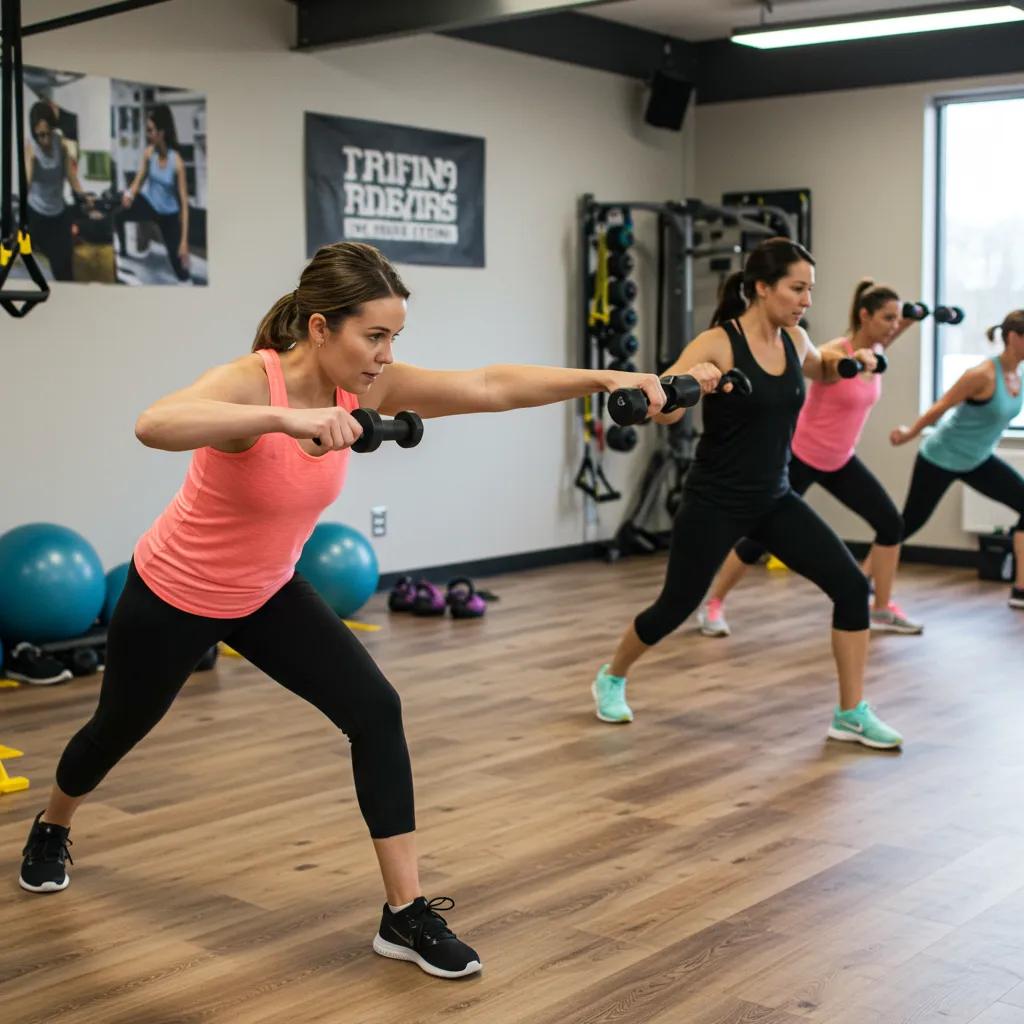
allows precise assessment and tailored progressions that address individual asymmetries and movement deficits with focused coaching. Small group classes provide structured programming, consistency, and peer accountability while remaining cost-effective compared with one-on-one training. Combining both formats—periodic personal assessments with regular small-group practice—often yields faster and more sustainable mobility improvements because assessments inform individualized scaling within a group. Choose personal training when you have complex movement limitations and small groups when you need routine and community to maintain practice.
Balancing personalization and consistency leads into how specific class modalities produce different mobility outcomes, which we cover next.
How Do Dynamic Stretching and Corrective Exercise Classes Support Mobility?
Dynamic stretching and corrective exercise improve mobility through complementary mechanisms: one primes movement speed and coordination, the other remediates underlying impairments through assessment-based progressions. Dynamic stretching increases usable range at movement velocity and prepares tissues for activity, while corrective exercise focuses on identifying and fixing faulty movement patterns via targeted activation and progressive loading. Both approaches often appear together in effective classes, where dynamic flows warm participants and corrective drills address weak links. Integrating these approaches enhances both immediate performance and
- Dynamic stretching: Prepares the body for activity, emphasizes movement at speed, and improves coordination.
- Corrective exercise: Uses assessment to target deficits, emphasizes activation and progressive load, and reduces compensations.
- Pilates: Prioritizes motor control and sustained ranges to build stability through core integration.
What Are the Key Differences Between Dynamic Stretching and Pilates for Mobility?
Dynamic stretching targets joint range under movement, using flowing multi-joint patterns to rapidly prepare tissues for activity and enhance coordination. Pilates emphasizes slow, controlled movement with breath and core engagement to rebuild stability and refine motor control across sustained ranges. Dynamic stretching benefits athletes and those needing movement prep, while Pilates suits people seeking improved posture, pelvic and thoracic control, and longevity in joint function. Both increase usable range but through different tempos and emphases, making them complementary when combined appropriately in a .
How Can Corrective Exercise Prevent Injuries and Improve Movement?
Corrective exercise reduces injury risk through an that identifies deficits, applies targeted activation and mobility drills, and systematically loads improvements. Typical steps include a movement screen, activation drills (e.g., glute engagement), joint-specific mobility work (e.g., thoracic rotations), and progressive strength at new ranges to consolidate gains. Examples of corrective drills include glute bridges with banded activation and thoracic rotation flows to restore upper-back extension, both scaled by difficulty and frequency. Following this progression creates durable changes in movement patterns that translate to safer daily and athletic tasks.
Physical Therapy Benefits for Joint Health and Mobility
The results of this systematic review and meta-analysis suggest that physical therapy may have decreased joint pain and improved joint range of motion, joint health, and muscle strength in patients with hemophilia.
Effects of physical therapy on joint pain, joint range of motion, joint health, and mobility in patients with hemophilia: a systematic review and meta-analysis, CM Chen, 2023
How Can You Maximize Mobility Training Benefits at Home and in River North?
Maximizing mobility gains requires consistent daily practice, integrating class learning into home routines, and using assessments to guide progression. Adopt a short daily routine, attend classes that align with your goals, and book periodic assessments or consultations to refine progressions. For many people, a 3-step plan—practice targeted drills daily, integrate weekly classes, and consult a trainer for individualized progression—produces measurable improvements within weeks. Below is a simple, actionable plan to follow and next-step suggestions for trying classes or booking assessments with local providers surfaced in search listings.
- Practice: Do a 10–15 minute daily mobility routine focused on your key joints.
- Integrate: Attend a weekly mobility or pilates class to receive coached feedback.
- Consult: Book a movement assessment or personal training session to individualize progressions.
What Are Effective Mobility Exercises to Practice Outside Classes?
Below is a concise at-home routine with targeted exercises, recommended frequency, and scaling cues to reinforce class progress. Perform each drill for the recommended sets or time and adjust difficulty by increasing range, adding bands, or incorporating slow eccentric control to progress safely. Consistency—daily or near-daily practice—yields the best transfer from class to function and reduces reliance on alone.
Research suggests that while static stretching can offer benefits, dynamic stretching is generally more effective for preparing the body for activity and enhancing performance.
Static vs. Dynamic Stretching for Mobility and Performance
Static stretching used in a separate training session can provide health related range of motion benefits. Generally, a warm-up to minimize impairments and enhance performance should be composed of a submaximal intensity aerobic activity followed by large amplitude dynamic stretching and then completed with sport-specific dynamic activities. Sports that necessitate a high degree of static flexibility should use short duration static stretches with lower intensity stretches in a trained population to minimize the possibilities of impairments.
A review of the acute effects of static and dynamic stretching on performance, DG Behm, 2011
| Exercise | Targeted Joint / Muscle | Difficulty | Frequency |
|---|---|---|---|
| Thoracic rotations | Thoracic spine / upper back | Beginner → Add band | Daily |
| Hip CARs (controlled articular rotations) | Hips / mobility control | Moderate → Add hold | Daily |
| Ankle dorsiflexion mobilization | Ankles / squat depth | Beginner → Weighted lunges | Daily |
| Glute activation bridge | Glutes / hip stability | Beginner → Single-leg bridge | Every other day |
How to Choose the Right Mobility Class Based on Your Fitness Goals?
A brief decision framework maps common goals to recommended class types and useful questions to ask instructors before booking. Match your primary objective—pain relief, athletic performance, or longevity—with the modality that emphasizes the needed mechanism: remediation, movement prep, or control and strength at range. Asking instructors about assessment practices, class size, and how progress is measured ensures before you commit.
- Goal: Pain relief → Recommended: Corrective exercise or assessment-led personal training. Ask: “How do you assess movement and individualize drills?”
- Goal: Athletic performance → Recommended: Dynamic stretching and mobility-strength classes. Ask: “How do you integrate load and speed into mobility work?”
- Goal: Aging and longevity → Recommended: Pilates or corrective + strength integration. Ask: “How do you adjust progressions for joint health?”
These mappings and questions help you select a class that aligns with outcomes and ensures efficient use of time and effort.
Frequently Asked Questions
1. What should I expect during my first mobility class?
During your first mobility class, you can expect a structured environment where the instructor will guide you through various drills aimed at improving your range of motion and joint health. The class may begin with a warm-up to prepare your body, followed by specific exercises targeting different joints. Instructors often provide modifications based on individual needs, so don’t hesitate to ask questions. You’ll likely receive feedback on your form and may participate in a brief assessment to tailor the experience to your abilities.
2. How often should I attend mobility classes for optimal results?
For optimal results, attending mobility classes at least once a week is recommended, complemented by daily at-home practice. This frequency allows your body to adapt to the movements while reinforcing the skills learned in class. Consistency is key; regular attendance helps solidify new movement patterns and enhances flexibility and strength over time. Additionally, periodic assessments with a trainer can help track your progress and adjust your routine as needed to ensure continued improvement.
3. Can mobility training help with chronic pain management?
Yes, mobility training can be highly effective for managing chronic pain. By focusing on improving joint function and movement patterns, these classes can help alleviate discomfort associated with stiffness and poor mobility. The targeted exercises aim to strengthen the muscles around affected joints, enhance flexibility, and promote better movement mechanics. Many participants report reduced pain levels and improved daily function after consistently engaging in mobility-focused workouts, making it a valuable component of a comprehensive pain management strategy.
4. Are mobility classes suitable for beginners?
Absolutely! Mobility classes are designed to accommodate all fitness levels, including beginners. Instructors typically provide modifications and progressions to ensure that everyone can participate safely and effectively. Beginners will benefit from the foundational movements taught in these classes, which can help improve overall mobility and prevent injuries. It’s important to communicate your experience level to the instructor, who can tailor the session to meet your needs and help you build confidence in your abilities.
5. How do I know if a mobility class is right for me?
To determine if a mobility class is right for you, consider your personal fitness goals and any specific movement limitations you may have. If you seek to improve flexibility, reduce pain, or enhance athletic performance, mobility classes can be beneficial. Additionally, inquire about the class structure, instructor qualifications, and whether they offer assessments to tailor the experience to your needs. Attending a trial class can also help you gauge if the environment and teaching style align with your preferences.
6. What should I wear to a mobility class?
When attending a mobility class, it’s best to wear comfortable, breathable clothing that allows for a full range of motion. Opt for fitted athletic wear that won’t hinder your movements, such as leggings, shorts, or moisture-wicking tops. Supportive footwear is also important; choose shoes that provide stability and grip without being overly restrictive. Avoid heavy accessories that could interfere with your movements, and consider bringing a water bottle to stay hydrated throughout the session.
7. Can I combine mobility training with other fitness routines?
Yes, combining mobility training with other fitness routines is highly beneficial. Mobility work complements strength training, cardio, and sports-specific workouts by enhancing flexibility, joint health, and overall movement quality. Integrating mobility exercises into your warm-up or cool-down can improve performance and reduce the risk of injury. Many athletes and fitness enthusiasts find that regular mobility training enhances their overall capabilities, making it a valuable addition to any fitness regimen.
Conclusion
Engaging in mobility workout classes in River North can significantly enhance your joint health, functional range, and injury prevention, leading to improved daily performance and athletic capabilities. By understanding the various class types and their benefits, you can make informed decisions that align with your personal fitness goals. Consider trying a class or scheduling a movement assessment to experience the transformative effects of targeted mobility training. Explore local studios today to take the first step towards a more mobile and