
Strength and conditioning workout classes combine progressive resistance training, metabolic conditioning, and mobility work to build functional strength and improve daily performance for busy urban professionals. This article explains five clear reasons River North residents and commuters should consider joining local strength and conditioning classes, including how these programs work, what to expect in a typical session, and which formats deliver the best results.
Many River North professionals juggle long commutes, desk time, and high-pressure jobs that increase injury risk and reduce energy; targeted strength and conditioning addresses those problems by improving posture, resilience, and metabolic health. You will learn the physiological benefits, how small group personal training amplifies results, why functional fitness matters for office-based lifestyles, and practical expectations for class structure and equipment.
Sections include a benefits breakdown with a compact comparison table, an explanation of the small-group model with a format comparison table, injury-prevention strategies with specific exercises, and a clear class-expectations guide that helps you choose a program quickly. Throughout, terms like strength and conditioning River North and personalized strength programs River North are used to keep the guidance local and actionable.
What Are the Key Benefits of Strength and Conditioning Classes in River North?
Strength and conditioning classes develop muscle strength, improve cardiovascular endurance, boost resting metabolism, and enhance movement quality through progressive overload and mixed-modal conditioning. These programs rely on compound lifts and interval-style conditioning to create both neuromuscular adaptations and elevated post-workout calorie burn, producing measurable gains in weeks for consistent participants. For River North professionals, the combination of time-efficient sessions and targeted mobility work reduces everyday pain and improves energy for long workdays and commuting. Below is a concise list of the top benefits to highlight the direct value of joining classes in this neighborhood.
Strength and conditioning classes offer the following advantages:
- Increased Strength and Power: Progressive barbell and bodyweight work improves lifting capacity and daily task performance.
- Improved Endurance: Conditioning intervals boost work capacity for both sport and everyday stamina.
- Higher Metabolic Rate: Muscle mass and metabolic conditioning increase resting calorie burn.
- Better Mobility and Posture: Movement prep and corrective exercises reduce desk-related stiffness.
- Stress Reduction and Community: Group training promotes social support and mental resilience.
This summary shows how varied benefits combine to support both performance and daily function, which leads naturally to examining how classes produce strength and endurance gains in practice.
How Do Strength Classes Improve Physical Strength and Endurance?
Strength classes increase force production and endurance by using progressive overload, compound movements, and structured periodization to stress muscles and nervous system appropriately.
Trainers program rep ranges, tempo, and load progression—such as moving from bodyweight patterns to loaded squats and deadlifts—to stimulate hypertrophy and neural efficiency over time. In the short term, neuromuscular coordination and stamina improve within a few weeks; measurable strength gains commonly appear within 4–12 weeks with consistent training and adequate recovery.
Recent research and industry guidelines emphasize compound lifts and progressive loading as reliable mechanisms for increasing functional strength and carrying over to improved endurance.
Research indicates that progressive overload can be achieved through various methods, not solely by increasing weight.
Progressive Overload in Strength Training: Load vs. Repetitions
Progressive overload is a principle of resistance training exercise program design that typically relies on increasing load to increase neuromuscular demand to facilitate further adaptations. However, little attention has been given to another way of increasing demand—increasing the number of repetitions.
This study aimed to compare the effects of two resistance training programs: (1) increasing load while keeping repetition range constantvs(2) increasing repetitions while keeping load constant. We aimed to compare the effects of these programs on lower body muscle hypertrophy, muscle strength, and muscle endurance in resistance-trained individuals over an 8-week study period.
Forty-three participants with at least 1 year of consistent lower body resistance training experience were randomly assigned to one of two experimental, parallel groups: A group that aimed to increase load while keeping repetitions constant (LOAD:n= 22; 13 men, nine women) or a group that a
Training mechanisms like progressive overload and compound lifts make clear why participants see faster returns when sessions are consistent, which brings attention to how metabolic elements in classes accelerate fat loss and metabolic change.
In What Ways Do These Classes Boost Metabolism and Support Fat Loss?
Strength training increases lean muscle mass, which raises basal metabolic rate and improves long-term calorie expenditure; metabolic conditioning (MetCon) elements add high-intensity intervals that elevate excess post-exercise oxygen consumption (EPOC). Combined programming—periodic heavy strength blocks plus short, intense conditioning rounds—creates both acute calorie burns and chronic metabolic improvements through increased muscle tissue.
Examples include pairing a barbell strength block with a 10-minute AMRAP of rowing and kettlebell swings to drive both hypertrophy and cardiovascular adaptation. For meaningful fat-loss outcomes, exercise must be paired with sensible nutrition and recovery; recent studies indicate the best body-composition changes occur when resistance training is central to a program.
The metabolic impact of exercise, particularly the concept of EPOC, is a key factor in understanding how training boosts metabolism.
Metabolic Benefits of Strength and Conditioning: Understanding EPOC
The explanation for this observation stems from the faster initial rate of V O 2 decline in trained individuals during the fi rst 10 min of exercise, which quickly leads to similar absolute V O 2 values in each group . It has been suggested that trained individuals have a more rapid return to resting levels of post-exercise metabolism than untrained individuals when exercising at the same absolute or relative exercise intensity [ 1 , 7 ] . EPOC in obese individuals has been poorly investigated and only one study has focused on the diff erence in EPOC between lean and overweight/ obese individuals during 130 min post-exercise recovery . Contrary to the fi ndings of Short et al. , this study showed that overweight/obese subjects had a lower EPOC magnitude and duration compared with lean individuals with similar aerobic fi tness . Moreover, overweight/obese individuals demonstrated lower fat oxidation [i. e., no shift from carbohydrate (CHO) to fat
This metabolic strategy ties directly into class formats and delivery models, where small group training often balance efficiency and personalization to produce consistent results.
| Benefit Area | Mechanism | Typical Timeline |
|---|---|---|
| Strength | Progressive overload via compound lifts | 4–12 weeks for measurable gains |
| Metabolism | Increased muscle mass + MetCon-driven EPOC | Noticeable changes in 4–8 weeks |
| Injury Prevention | Mobility, stability, eccentric control | Reduced symptoms within 3–6 weeks |
The table above clarifies how each benefit maps to training mechanisms and expected timeframes, helping River North professionals set realistic goals before joining a class.
How Does Small Group Personal Training Enhance Results in River North?

Small group personal training blends coach supervision with peer support, delivering guided programming that scales individual loads while keeping sessions cost-effective and social. This model typically uses a small trainer-to-client ratio to enable technique coaching, individual modifications, and progress tracking while preserving the motivational environment of a group. For busy River North clients, small groups provide scheduled sessions and built-in accountability that improve adherence compared with self-directed workouts. Below is a compact comparison of how small group formats stack up against one-to-one and large group classes across key attributes.
| Format | Personalization | Cost | Typical Results |
|---|---|---|---|
| Small Group | Moderate — scalable modifications and progress checks | Mid-range | Strong adherence and steady progress |
| 1:1 Personal Training | High — fully tailored programming | Higher cost | Fastest individualized progress |
| Large Group Classes | Low — generic programming for many | Lower cost | Good conditioning, limited personalization |
This comparison highlights why small group formats often represent a practical middle ground for River North residents seeking both coaching and community, which invites a closer look at the behavioral drivers behind accountability and motivation.
What Makes Small Group Training Effective for Accountability and Motivation?
Small group training leverages social accountability, scheduled sessions, and coach-led checkpoints to encourage consistent attendance and effort. Peers create positive pressure through shared goals and friendly competition, while trainers maintain progress logs and adjust programming to prevent plateaus. Behavioral science shows that people are more likely to maintain exercise routines when they feel socially connected and when sessions are predictable in the weekly schedule. Practical tips for choosing a motivating class include visiting during peak times, observing coach engagement, and confirming how progress is tracked.
These motivational mechanisms also allow trainers to deliver meaningful personalization within a group setting, ensuring individuals still follow tailored progressions.
How Is Personalization Achieved in Small Group Strength Training?
Trainers personalize group sessions by prescribing scalable movement variations, adjusting loads, and using micro-progressions so each participant advances at an appropriate rate. Typical methods include tiered exercise options, individualized load cues, and brief one-on-one check-ins during class to refine technique. Coaches often run periodic assessments to shift load and complexity, maintaining progression while preserving group cohesion. This blend of structure and personalization helps River North participants see steady improvements without the expense of full private training.
A table below compares small group, 1:1, and large-class formats on personalization, cost, and accountability to reinforce decision-making for prospective clients.
| Approach | Personalization Method | Accountability Feature |
|---|---|---|
| Small Group | Scaled exercises and coach check-ins | Shared goals and attendance tracking |
| 1:1 Training | Customized programming and session focus | Direct daily/weekly accountability |
| Large Group | Standardized classes | General motivation from community |
Why Is Injury Prevention and Functional Fitness Important for River North Professionals?
Functional strength and injury prevention are essential for professionals who spend long hours seated or commute frequently, as weak stabilizers and tight hips commonly lead to low-back and shoulder injuries. Strength and conditioning classes emphasize joint resilience through eccentric loading, mobility drills, and stability exercises that restore balanced movement patterns. Improving posterior chain strength and scapular stability reduces the risk of common desk-related complaints and supports long-term work capacity. Time-efficient corrective programming within classes helps busy River North professionals protect joints and maintain consistent training without lengthy rehab sessions.
Below is a list of targeted program features that support joint health and mobility for urban professionals.
- Dynamic Warm-ups: Prepare tissues and nervous system for loading.
- Mobility Circuits: Maintain or increase usable range of motion.
- Stability Training: Strengthen joint-supporting muscles to reduce injury risk.
How Do Strength and Conditioning Classes Support Joint Health and Mobility?
Classes incorporate movement prep, mobility drills, and strengthening of stabilizer muscles to preserve joint health and usable range of motion. Eccentric-focused exercises and controlled progressions build tendon resilience, while targeted mobility work addresses ankle, hip, and thoracic restrictions common in desk-bound populations. Frequency recommendations typically include mobility sessions multiple times per week and strength work two to three times weekly for optimal joint health. Regular practice of these elements in class reduces stiffness and improves movement efficiency for everyday tasks.
Consistent implementation of these practices leads to specific exercise choices that address the most common problem areas for professionals. For more insights, visit our blog.
What Specific Exercises Help Prevent Common Injuries in Busy Professionals?
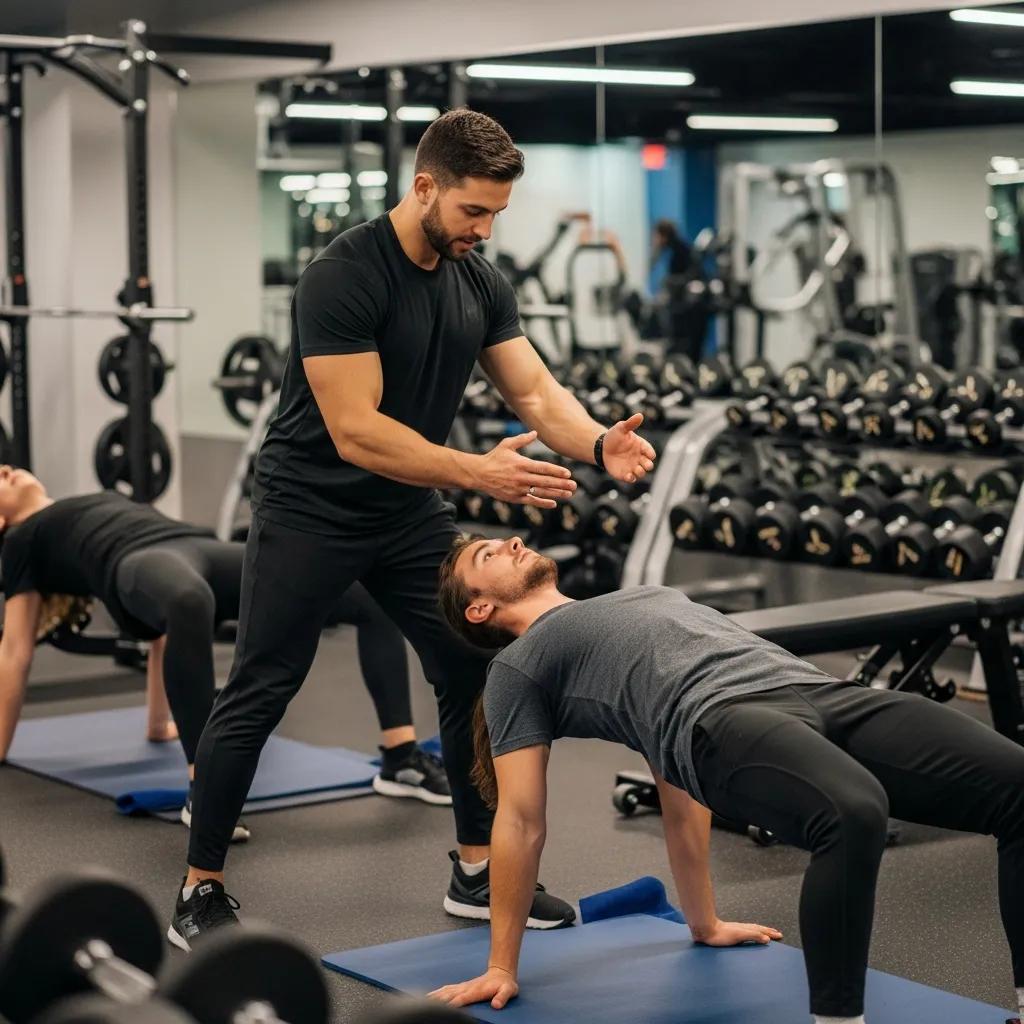
Practical exercises that classes often emphasize include glute bridges for posterior chain activation, face pulls for scapular stability, and hip-hinge patterns to protect the lower back. Recommended sets and reps might be three sets of 8–12 for strengthening movements and 2–3 sets of 10–15 for mobility-focused drills performed several times weekly. These choices target low back, shoulder, and hip concerns and are easy to scale in group settings to suit different strength levels. Incorporating these exercises into short daily routines or class programming supports durable movement quality and reduces pain.
| Area | Exercise | Purpose |
|---|---|---|
| Lower Back/Hips | Glute bridge / hip hinge | Posterior chain activation and load distribution |
| Shoulders | Face pulls / band pull-aparts | Scapular control and rotator cuff strength |
| Mobility | Thoracic rotations / ankle dorsiflexion drills | Improve movement range and movement patterns |
What Should You Expect from Strength and Conditioning Workout Classes in River North?
Expect a time-efficient session template that includes a focused warm-up, a strength block using progressive overload, a conditioning segment to build metabolic capacity, and a brief cool-down focused on mobility and recovery. Typical class durations for busy professionals range from 45 to 60 minutes and emphasize coach-led technique cues, measured progressions, and scalable movements for different fitness levels. Quality classes prioritize safety with structured progressions, consistent tracking of performance metrics, and short assessments to adjust programming. Below is a practical checklist of features to look for when choosing a class in River North.
- Class Structure: Warm-up, strength block, MetCon/conditioning, and cool-down.
- Trainer Ratio: Small trainer-to-client ratio for technique feedback and safety.
- Equipment: Barbells, dumbbells, kettlebells, rowers, and mobility tools commonly used.
- Progress Tracking: Simple metrics (load, reps, time) recorded to measure improvements.
This checklist helps you evaluate whether a class will deliver efficient, measurable outcomes, and it transitions into a short practical next step for readers ready to try a local program.
How Are Classes Structured to Maximize Efficiency and Results?
Efficient classes begin with a targeted dynamic warm-up to prime movement patterns, then move into a strength-focused block using compound lifts with clear progressive aims. A MetCon or conditioning segment follows to drive aerobic and anaerobic capacity, and the session ends with mobility and soft-tissue work to aid recovery. Coaches use stations, paired sets, or timed circuits to maximize coach-to-client time and to keep sessions intense but safe. This structure supports measurable progress with minimal time commitment, making it ideal for River North professionals.
Which Equipment and Training Methods Are Common in River North Gyms?
Local River North classes typically use barbells, dumbbells, kettlebells, rowing machines, sleds, and resistance bands to deliver varied and scalable training stimuli. Common methods include compound barbell lifts for strength, AMRAPs and EMOMs for conditioning, and mobility circuits for joint health and movement quality. When evaluating a trial class, ask about safety coaching, how loads are scaled, and whether coaches prioritize technique over speed to reduce injury risk.
- Barbells and Compound Lifts: Foundation for progressive strength gains.
- Kettlebells and Dumbbells: Provide scalable unilateral and dynamic work.
- Rowers and Sleds: Offer low-impact conditioning options and power development.
Frequently Asked Questions
What should beginners know before joining a strength and conditioning class?
Beginners should understand that strength and conditioning classes are designed to accommodate all fitness levels. It’s essential to communicate your experience and any physical limitations to the trainer.
Classes typically start with a warm-up to prepare your body, followed by strength training and conditioning segments. Focus on learning proper techniques to prevent injuries, and don’t hesitate to ask for modifications if needed. Consistency is key, so aim to attend classes regularly to see progress over time.
How often should I attend strength and conditioning classes for optimal results?
For optimal results, attending strength and conditioning classes 2 to 4 times per week is recommended. This frequency allows your body to adapt to the training stimulus while providing adequate recovery time. Consistency is crucial for building strength, improving endurance, and enhancing overall fitness. Additionally, incorporating rest days and cross-training activities can help prevent burnout and reduce the risk of injury. Always listen to your body and adjust your schedule based on how you feel.
Can strength and conditioning classes help with weight loss?
Yes, strength and conditioning classes can significantly aid in weight loss. These classes combine resistance training with high-intensity conditioning, which boosts metabolism and promotes fat loss. The increase in lean muscle mass from strength training elevates your resting metabolic rate, allowing you to burn more calories even at rest. However, for effective weight loss, it’s essential to pair your workouts with a balanced diet and proper hydration. Consistency in both exercise and nutrition will yield the best results.
What types of injuries can strength and conditioning classes help prevent?
Strength and conditioning classes can help prevent various injuries, particularly those related to sedentary lifestyles, such as lower back pain, shoulder injuries, and knee issues. By focusing on functional movements, mobility work, and strengthening stabilizer muscles, these classes enhance joint resilience and improve overall movement patterns. Specific exercises targeting the posterior chain, core stability, and shoulder mobility are often included to address common weaknesses and imbalances, reducing the risk of injury during daily activities.
Are there specific dietary recommendations to complement strength training?
Yes, a balanced diet is crucial for maximizing the benefits of strength training. Focus on consuming adequate protein to support muscle repair and growth, typically around 1.2 to 2.0 grams per kilogram of body weight, depending on your activity level. Incorporate healthy fats and complex carbohydrates to fuel your workouts and aid recovery. Staying hydrated is also essential, as dehydration can impair performance. Consider consulting a nutritionist for personalized dietary advice tailored to your fitness goals.
How can I track my progress in strength and conditioning classes?
Tracking progress in strength and conditioning classes can be done through various methods. Keep a workout journal to log your weights, repetitions, and any personal bests achieved during sessions.
Many gyms also provide performance metrics, such as body composition analysis or fitness assessments, to help you monitor changes over time. Regularly discussing your goals and progress with your trainer can provide additional insights and motivation, ensuring you stay on track toward your fitness objectives.
Conclusion
Joining strength and conditioning classes in River North offers urban professionals a pathway to enhanced strength, improved endurance, and better overall health. These classes not only address common issues like poor posture and low energy but also foster a supportive community that encourages consistent participation. By taking the first step and trying a local class, you can experience the transformative benefits firsthand. Discover how these targeted programs can elevate your fitness journey today.