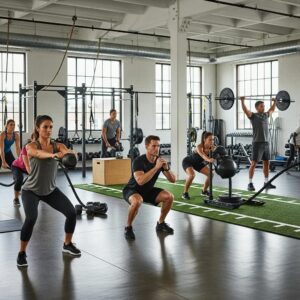

Small group workout classes in River North blend personalized coaching with community-driven accountability to deliver measurable fitness improvements for busy Chicago residents. This article explains how these boutique sessions—typically led by NASM-certified trainers and focused on functional strength, HIIT, Pilates, and mobility—create better adherence, faster progress, and a more enjoyable routine than many larger or purely virtual formats. Readers will learn the primary benefits, the popular class formats in River North, practical criteria for choosing a studio, and how community dynamics produce lasting transformation. The piece maps clear decision points for commuters, professionals, and residents seeking efficient workouts and describes the specific attributes to ask about when booking a trial. Expect concise comparisons, checklists, and data-driven EAV tables that connect benefit → attribute → outcome so you can pick the right small group option in River North.
What Are the Key Benefits of Small Group Workout Classes in River North?
Small group workout classes deliver focused coaching, social motivation, cost-efficiency, programming variety, and community support that together improve adherence and outcomes for River North residents. Small groups combine the hypernym “group fitness” with the hyponym “small group personal training” to offer personalized progressions while retaining peer-driven energy. This structure shortens the path from intent to habit by coupling scheduled sessions with trainer feedback and shared milestones. Below is a quick list of the core advantages and what each produces for busy urban clients.
Small group training in River North offers these primary benefits:
- Personalized Attention: Trainers scale exercises and correct form for safer, faster progress.
- Stronger Accountability: Regular class times and peers increase consistency.
- Cost-Effective Coaching: Shared sessions lower per-person cost compared with 1-on-1 training.
- Diverse Programming: Rotating formats keep adaptation high and plateaus low.
- Community Support: Social bonds boost motivation and long-term adherence.
These benefits create both short-term performance gains and long-term habit change, which leads naturally to how individualized attention improves results in practice.
How Does Personalized Attention Improve Fitness Results in Small Groups?

Personalized attention in small groups means trainers can observe movement, correct technique, and adjust loads while still serving multiple clients in the same session. Trainer-to-client ratio and targeted cues reduce injury risk and accelerate strength and motor-skill acquisition by addressing compensations in real time. For example, a coach who spots poor hip hinge mechanics can prescribe regressions and progressions that yield faster strength gains and fewer setbacks. This targeted correction mechanism (trainer → corrects → movement pattern) explains why small groups often produce measurable improvements in 8–12 weeks. Look for trainers who describe progression plans and regular performance checks during trials.
Why Is Motivation and Accountability Stronger in Small Group Fitness?
Accountability in small groups arises from scheduled commitments, peer presence, and explicit shared goals that leverage social motivation to increase attendance. Group dynamics—partner work, leaderboards, and milestone celebrations—create external structures that convert intention into repeated behavior. Behavioral science shows social norms and public commitments improve adherence, and studios that use buddy systems and weekly check-ins tend to see higher retention. These social mechanisms lead into the next section by framing the types of classes that best harness motivation for specific goals.
Which Types of Small Group Fitness Classes Are Popular in River North?
River North studios typically offer a mix of strength, HIIT, Pilates, functional fitness, and occasionally barre—each format serving distinct goals and movement emphases. These class types represent hyponyms of group fitness and map directly to different outcomes like lean mass, cardio capacity, mobility, and posture. Choosing a class depends on whether a participant prioritizes metabolic conditioning, movement quality, or core and posture work. The table below compares class types, their primary focus, and typical benefits to aid selection.
Introductory table: compare popular class formats to core goals and expected outcomes.
| Class Type | Primary Focus | Typical Benefits |
|---|---|---|
| Strength | Progressive overload, compound lifts | Increased lean mass, functional capacity |
| HIIT | Interval cardio + metabolic stress | Improved VO2, time-efficient calorie burn |
| Pilates | Core control and mobility | Better posture, reduced back pain |
| Functional Fitness | Movement quality and daily strength | Improved movement patterns, injury resilience |
This classification clarifies which session to pick based on goals. The following subsections outline the advantages of strength/HIIT and the complementary role of Pilates and functional work.
What Are the Advantages of Strength Training and HIIT Classes?
Strength and HIIT classes in small groups offer complementary physiological effects: strength sessions build muscle and functional capacity, while HIIT boosts cardiovascular fitness and metabolic rate. In a small-group setting, coaches scale load and intensity so participants receive progressive overload without losing safety checks. Typical sessions alternate compound lifts or circuits with coach-led regressions and timed intervals, producing measurable improvements in lean mass and VO2 over 8–12 weeks. This combination supports time-efficient goals for River North professionals who need high-impact results in limited weekly training time.
How Do Pilates and Functional Fitness Classes Enhance Well-being?
Pilates and functional fitness classes prioritize movement quality, core stability, and mobility, which translate to better posture and daily function for urban lifestyles. Small-group Pilates sessions allow instructors to cue alignment and breathing while prescribing specific regressions for office-related tightness and back pain. Functional classes focus on movement patterns—hinge, squat, carry—that directly improve how clients perform everyday tasks. These formats reduce injury risk and complement strength/HIIT training, creating a balanced regimen that supports both performance and long-term wellness.
How Can You Choose the Best Small Group Fitness Studio in River North?
Choosing the right River North studio requires evaluating trainer credentials, class size, programming progression, equipment quality, scheduling flexibility, and transparent pricing. These criteria act as decision attributes you can verify during a trial or tour and determine whether a studio aligns with your goals and lifestyle. Below is a concise checklist to guide in-person visits, followed by a comparison table that maps each criterion to what to look for and why it matters.
Use this checklist when evaluating a studio in River North:
- Verify trainer qualifications and certification recognition.
- Confirm typical class size and trainer-to-client ratio.
- Inspect equipment variety and maintenance practices.
- Ask about program progression and individualized modifications.
- Evaluate booking flexibility and trial-class availability.
The following table translates selection criteria into observable attributes and their impact on results.
| Criterion | What to Look For | Why It Matters |
|---|---|---|
| Trainer Qualifications | NASM or equivalent certification | Ensures safe programming and corrective skills |
| Class Size | 6–12 participants typical | Balances personalization with group energy |
| Programming | Clear progressions and milestones | Drives measurable improvements over time |
| Equipment | Varied, well-maintained tools | Enables diverse and scalable workouts |
These checks form a practical framework to compare studios quickly. After assessing, consider trying a trial class to experience coaching and community firsthand.
After you evaluate features, try booking a trial small group class or studio tour to confirm fit. When scheduling, ask specifically about trainer qualifications (for example NASM-educated approaches), usual class sizes, and how the studio supports progression and scheduling flexibility; these questions reveal whether the environment will help you reach measurable goals.
Why Are Trainer Qualifications and NASM Certification Important?
Trainer credentials such as NASM certification indicate knowledge in program design, corrective exercises, and client safety—skills that matter in small-group settings where coaches must scale workouts effectively. NASM-trained professionals understand periodization, corrective assessments, and how to sequence sessions to balance intensity and recovery. The semantic triple here is: NASM certification → signals → program design competency. Asking about certification during a trial helps verify that the coach can deliver both safety and progression in a shared class environment.
The importance of qualified trainers and structured programs is underscored by research into what keeps clients engaged. personal trainers
Boutique Fitness Studios: Group Cohesion and Customer Retention
Boutique Fitness Studios and Group Cohesion: What makes people stick longer to their exercise routine and turn them into recurring customers?
Boutique Fitness Studios and Group Cohesion: What makes people stick longer to their exercise routine and turn them into recurring customers?, 2024
What Should You Look for in Studio Environment and Program Customization?
A studio’s environment—lighting, equipment layout, and cleanliness—affects comfort and consistency, while program customization determines whether you can progress within group formats. Look for classes with clear warm-up/mobility segments, accessible regressions, and periodic performance checks. Sample questions to ask include how trainers track progress, how they modify exercises for injuries, and whether there are defined progression pathways. These observations help you choose a studio that supports sustainable improvement rather than ad-hoc sessions.
How Are Small Group Workout Classes Building Community and Transforming Fitness in River North?
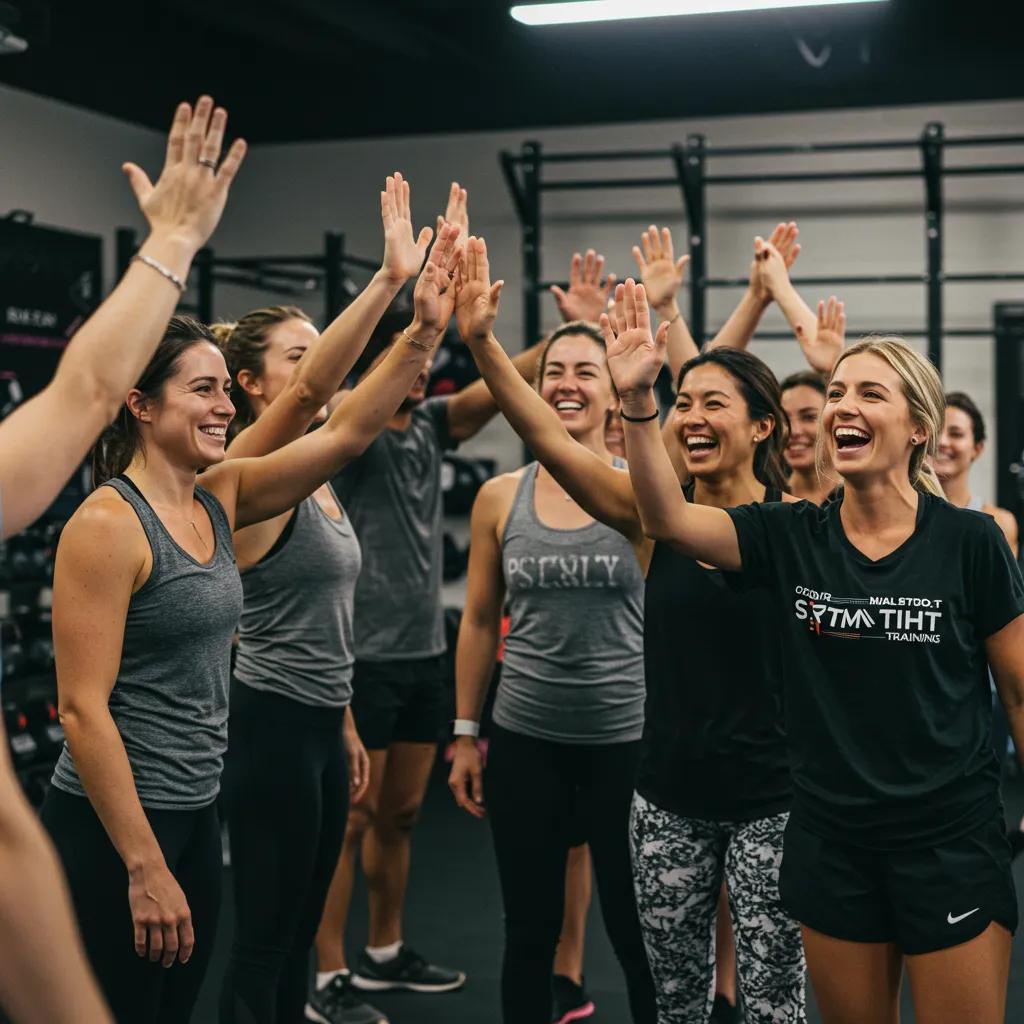
Small group classes create community through shared rituals, milestone recognition, and member events that turn sporadic attendance into regular habit and identity. Community mechanisms—partner drills, post-class check-ins, and group challenges—produce social reinforcement that extends beyond the studio into daily life. These structures function as social capital: community → reinforces → consistency. Below is a short list of concrete community-building practices commonly used to enhance adherence and satisfaction.
- Partner work and in-class collaboration to build connection.
- Weekly milestones and public recognition to celebrate progress.
- Social events and member groups that extend support beyond sessions.
These practices foster belonging and sustained behavior change, and they set the stage for observable transformation patterns described next.
How Do Group Fitness Classes Foster Connection and Support?
Group fitness fosters connection by enabling repeated shared experiences, structured partner interactions, and public accountability that build trust among members. Trainers who facilitate introductions, pair programming, and milestone celebrations accelerate social bonding and create informal support networks. Over time these connections transform exercise from an isolated task into a social routine that members prioritize. Understanding these mechanisms clarifies why community-driven programs often yield higher retention and better long-term outcomes than standalone workouts.
What Success Stories Highlight the Impact of Small Group Training?
Typical success patterns are consistent: busy professionals who commit to 8–12 weeks of small group training often report measurable increases in strength, improved mobility, and better consistency. Aggregated outcomes show timelines where initial habit formation occurs in 4–6 weeks and substantive strength or body-composition changes appear by 8–12 weeks. These typified templates—consistent attendance + progressive programming + social accountability = sustainable change—illustrate how small groups convert short-term effort into lasting lifestyle shifts. If you’re ready to see change, find nearby small group training classes in River North and try a session; prioritize NASM-certified trainers and small class sizes when you book a trial.
Frequently Asked Questions
What should I wear to a small group workout class?
When attending a small group workout class, it’s essential to wear comfortable, moisture-wicking clothing that allows for a full range of motion. Opt for supportive athletic shoes that are appropriate for the type of workout you’ll be doing, whether it’s strength training, HIIT, or Pilates. Additionally, consider layering your outfit, as studios can vary in temperature. Don’t forget to bring a water bottle to stay hydrated and a towel for comfort during your session.
How can I track my progress in small group classes?
Tracking progress in small group classes can be achieved through various methods. Many studios provide performance assessments at regular intervals, allowing you to measure improvements in strength, endurance, and flexibility. Additionally, keeping a personal workout journal can help you log your workouts, weights lifted, and personal bests. Some studios may also use technology, such as fitness apps or wearable devices, to help you monitor your progress and set achievable goals.
Are small group classes suitable for beginners?
Yes, small group classes are often designed to accommodate participants of all fitness levels, including beginners. Trainers typically provide modifications and progressions for exercises, ensuring that everyone can participate safely and effectively. When choosing a class, look for those labeled as “beginner-friendly” or “introductory.” Communicating your experience level to the trainer before the class can also help them tailor the session to meet your needs.
How often should I attend small group classes for optimal results?
For optimal results, attending small group classes 2 to 4 times per week is generally recommended. This frequency allows for sufficient training volume while also providing adequate recovery time. Consistency is key, so finding a schedule that fits your lifestyle and allows you to commit to regular attendance will yield the best outcomes. Additionally, incorporating rest days and cross-training activities can enhance your overall fitness and prevent burnout.
What should I expect during my first small group class?
During your first small group class, expect a welcoming environment where the trainer will introduce themselves and outline the session’s structure. You may start with a warm-up, followed by the main workout, which will include a mix of exercises tailored to the group’s fitness level. The trainer will provide guidance and modifications as needed. Don’t hesitate to ask questions or communicate any concerns; trainers are there to support you and ensure a positive experience.
Can I bring a friend to a small group class?
Many studios encourage participants to bring friends to small group classes, as it can enhance motivation and accountability. Some studios even offer referral discounts or promotions for new participants. Before bringing a friend, check with the studio regarding their policy on guest attendance and whether they need to register in advance. Sharing the experience can make workouts more enjoyable and help both of you stay committed to your fitness goals.
What are the typical class sizes for small group workouts?
Typical class sizes for small group workouts range from 6 to 12 participants. This size allows for a balance between personalized attention from the trainer and the energy of a group setting. Smaller class sizes often lead to better coaching and more individualized feedback, while still fostering a sense of community and camaraderie among participants. When choosing a studio, consider the class size to ensure it aligns with your preferences for interaction and support.
Conclusion
Small group workout classes in River North offer personalized coaching, community support, and diverse programming that enhance fitness outcomes for busy Chicago residents. By fostering accountability and motivation, these classes help individuals achieve their health goals more effectively than traditional gym settings. If you’re ready to transform your fitness journey, consider booking a trial class at a local studio to experience the benefits firsthand. Discover how small group training can lead to lasting change and a supportive community today.